GENDER TRANSFORMATION THROUGH TIME-SAVING TECHNOLOGIES
In the dry and drought-prone communities of Gwanda District, climate change had devastating effects on the livelihoods of smallholder farmers particularly women, elderly, Persons with Disabilities (PWDs) and other vulnerable groups. With limited access to decision-making spaces, financial literacy, and climate-resilient farming techniques, women carried a disproportionate burden of unpaid care work, including time-consuming tasks such as pounding small grains manually, fetching firewood and water over long distances, and managing food security with few resources.
Cultural norms further marginalized women from participating in economic activities or leadership roles within natural resource management groups such as environmental committees, grazing committees, dip-tank committees amongst others. Their voices were often absent or minimal in community dialogues and their value undermined because they lacked financial muscle, skills/knowledge and control over meaning assets. The few who engaged in rain-fed agriculture did so with limited knowledge of conservation methods, relying on depleted soils and inconsistent rainfall.
Through the Locally Led Indigenous Nature-Based Solutions for Climate Change Adaptation in Zimbabwe (LINCZ) project, implemented by BIC-CDS under MCC’s leadership and supported by Global Affairs Canada, change took root. The project embraced a Gender Equality Strategy aligned with Canada’s Feminist International Assistance Policy (FIAP). Women were empowered to take leadership in climate action, resource governance, and nature based-income-generating initiatives through value chain and market linkages. The introduction of gender dialogues and engagements, Gender Action Learning Systems (GALS), and the training of community gender champions shifted social norms, increasing men’s involvement in household tasks and creating shared responsibility in domestic labour. This was further concretised by introduction of time saving technologies within marginalised communities.
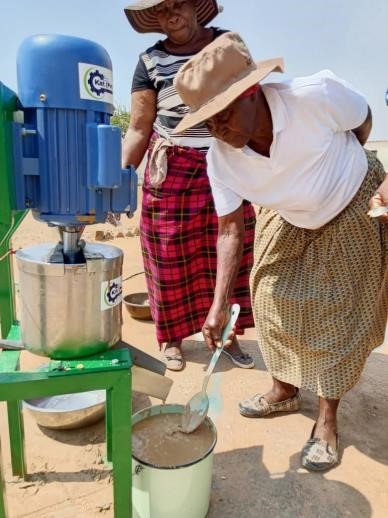
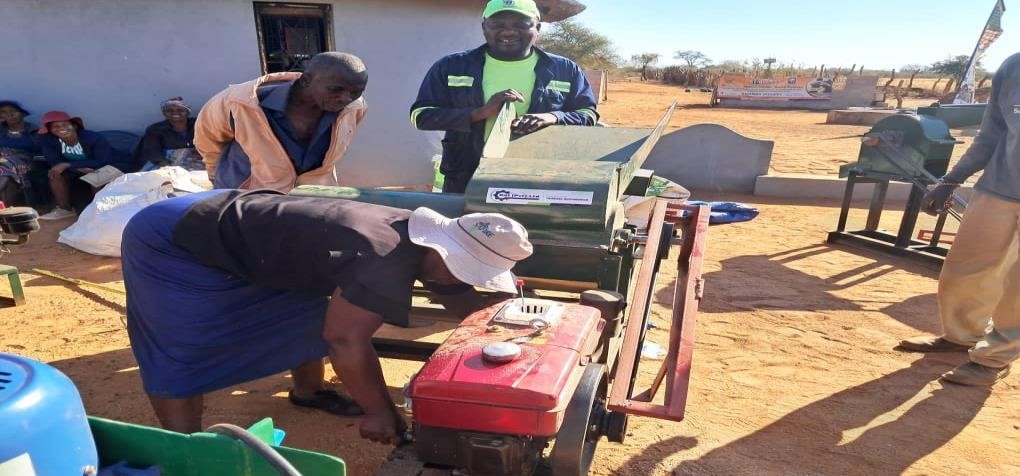
Women were introduced to climate-resilient livelihoods, including conservation agriculture, agroforestry and value addition in crops such as small grains. The project introduced time and energy-saving technologies such as threshers, millers, shellers, peanut butter machines, honey pressers which significantly reduced the time spent on food processing. Women reported spending up to 70% less time on grain processing as a result thresher introduction, allowing them to engage in income-generating activities. Use of time saving technologies not only reduced labour and time spent by women on domestic task but there is evidence of increase by men who become active participants in what were previously seen as women-only roles, promoting gender-balanced households. This freed up time for women to engage in income-generating projects and community leadership. For Loveness Ngulube, a 47-year-old mother and a farmer residing in Sitezi, ward 7 of Gwanda North, the struggle was personal and deeply unequal.
“Every day was a cycle of exhaustion,” she recalls. “I would wake at dawn, pound grain by hand, walk long distances for water and firewood, then return to cook and tend the field. I barely had time to rest, let alone think about income or leadership in community structures. I used to take 2 weeks to fill 10 bags of grain using stick-the traditional method of threshing but this task has been completed in 3 hours’ time using this time saving machines. My husband is now interested in threshing because of the machine” –said Loveness Ngulube.
Like many women in rural Zimbabwe, Loveness carried the invisible weight of unpaid care work, work that went unrecognized, unshared, and unspoken. Meanwhile, decisions around land, farming, and resources were made with her less voice. Her husband, Bongani Dlomo, a 52-year-old farmer, worked the land but didn’t share most of the domestic workload. The arrival of a thresher, a simple but valuable time-saving machine ignited change within their household. What once took Loveness two weeks of hard labour now took just three hours. But more importantly, her husband stepped in.
“He was amazed,” Loveness laughed. “For the first time, he said, ‘Let’s do this together.’ That machine didn’t just save time but changed our marriage.”
When they finished threshing their sorghum together in record time, Loveness beamed with pride, holding up a full bag of clean grain. She said that she never imagined this could be done so fast and her face glowing with joy. She said that her husband, Bongani said that he never imagined himself partaking in threshing as he regarded this task as for women. All what he was passionate on was gold panning. Loveness testified that they used to think that climate change was just about drought but now they know it’s also about role allocation and power dynamics, who has it and who gets left behind,
“Today, I’m not left behind.” She said.
Freed from backbreaking work, Loveness joined farmer aggregation group and started processing small grains for market, took part in community decision-making on community shared assets (particularly value chains time saving machines) and took part in other community income generation activities such as women’s clubs. The LINCZ project didn’t just plant crops. It planted confidence, respect, and hope. The LINCZ project has proven that when gender concerns placed at the core of climate adaptation initiative, entire communities become more climate resilient. The transformation in Gwanda District stands as a testament to the power of inclusive locally-led and gender-responsive nature-based solutions. Women are no longer passive recipients of the project activities but active leaders of change, restoring ecosystems, adapting to climate change and shaping a more equitable future.
Investing in gender-responsive, locally-led climate adaptation initiatives is the meaningful developmental agenda. Gwanda’s transformation shows that empowering women with skills, technology and voice strengthens entire communities and builds climate resilience from the grassroots. The impact is measurable not just in bags of grain or hectares restored but in shared responsibility, restored dignity and women