A new era for Mamsisi village as BIC-CDS scoops Kgobotwane Dam
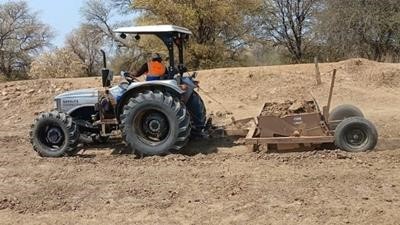
Siltation is a severe and persistent environmental problem in most rivers and dams in Zimbabwe which has led to reduction in water capacity posing serious threat to agriculture, wildlife and domestic water use. Community led efforts such as erection of silt traps and other interventions that include desilting are thereby critical in restoring the dams water holding capacity, supporting biodiversity and improving livelihoods especially in rural communities. Nkobotwane dam in Mamsisi Village in Ward 11 of Gwanda District, Zimbabwe is one notable example where such interventions have been done through the Locally Led Indigenous Nature Based Solutions for Climate Change Adaptation in Zimbabwe (LINCZ) implemented by Brethren in Christ Compassionate and Development Services (BIC-CDS).
Nkobotwane dam existence dates back to the 1940s and used to hold water throughout the year. However, overtime, the increased number of livestock due to population growth, unsustainable farming practices and extreme weather events induced by climate change have been some of the main contributing factors to the accumulation of silt into dam which has led to it drying up faster by mid-year.
“Long back, before the 2000s, we never thought this dam would dry up because it used to hold water throughout the year and our livestock would easily access water without having to travel longer distances which made it easy to herd cattle. Nowadays, the dam dries up by midyear leaving the community and livestock in a dire situation of vulnerability,” Village head Mr Moyo.
In addition to the siltation which has greatly reduced its water holding capacity, the unavailability of a spillway made the situation even worse as most of water meant to be collected was lost as runoff. The community tried to prevent water loss by placing sacks filled with sand but their efforts were in vain as intense rainfalls led to flooding which washed them all away.
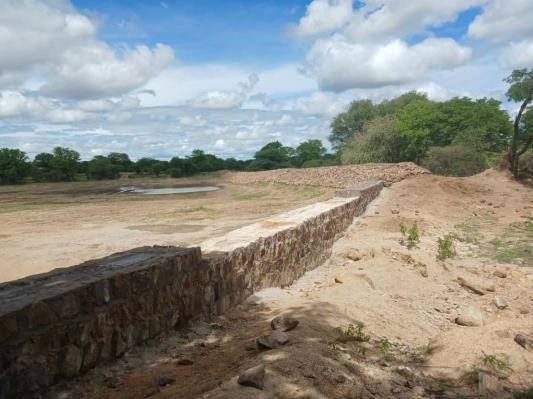
“The dam has never had a spillway. We tried some efforts of loading sacks with sand to prevent water loss but they were not strong enough to contain water and they were all washed away,” stated Moyo.
Community led efforts of scooping the dam were done in the early 2000s through a food for work program. However, they lacked machinery and scooped using shovels and wheelbarrows and hence not much silt was removed.
However, much to the rescue and delight of Mamsisi village community, BIC-CDS in partnership with Government departments such as the Department of Engineering, Mechanization and Soil Conservation (DAEMSC) and Environmental Management Agency (EMA) through the LINCZ project embarked in dam rehabilitation works at Nkobotwane dam in August 2025.
This came at a crucial time when the community was in desperate need not to see their dam lose water again after the 2025/2026 rainy season. BIC-CDS desilted using a dam scooper and a Tractor Loader Backhoe (TLB) machine which also raised the embankment by at least 0.3m. The tractor also ensured that mobilized stones were brought to the dam site for construction of a new spillway of at least 25m length to ensure that adequate water is contained when it rained.
Catchment management which includes putting silt traps around the dam and upstream was also done to reduce the amount of silt that comes into the dam. As such, the removal of silt by at least 1m and raising of the dam embankment has seen the dams water holding capacity increase from 4000m3 and 13400m3 and is anticipated to hold water until the onset of another rainy season. This rehabilitation is set to benefit at least 161 households and 3700 livestock (1750 donkeys, 1050 cattle, 800 goats and 100 sheep) with direct access to water from Mamsisi Village and other nearby lines such as Mawaza, Pumula, Pelela and Nikanyoro lines. Dam scooping at Nkobotwane dam will go a long way in climate change adaptation and improving the livelihoods of the community.