FROM FARM TO THE MARKET: THE PROCESS IN BETWEEN
GETTING agricultural produce from the farm successfully to the factory requires a lot of effort applied from production to processing to packaging. Some products may not get to the market because they are not fit for the market that they are supposed to attract. Just like mobile phones have made our communication efficient, energy saving technologies have notably brought about ease into the processing of agricultural produce to be ready for market especially for women. Mobile small grains thresher, chopper grinder, honey presser, solar driers, shelling and peanut butter making machines have significantly reduced workload some traditionally allocated to women creating time to focus on other productive and recreational tasks. These machines are not only efficient, but act as an encouragement for farmers to take farming as a business.
Reflections on the daily work done by both women and men has revealed that women tend to be occupied with work throughout the day even with menial or arduous tasks that most of time do not bring income into the household.
Amongst the many other tasks that women have, they are involved in tasks such as threshing and shelling agricultural produce using traditional methods. Looking at the small-grains mobile thresher, the LINCZ project being implemented in Gwanda District saw women having access to threshing and shelling machines thereby reducing the amount of time spent doing these activities. So far in Gwanda North and South wards 6, 7 and 14 have had access to chopper grinder, threshing shelling machines provided by Brethren in Christ- Compassionate and Development Services under the LINCZ project and they have exclaimed how efficient these machines are in saving them time to do other things in the household.
These energy saving technologies are enabling farmers to treat farming as a business and as a sustainable form on livelihood. Technology has made our world easier and convenient not only for a select few but for everyone with access and willingness to adopt it. The transition to using a mobile grain thresher has dramatically improved the efficiency and productivity of sorghum harvesting in our villages.
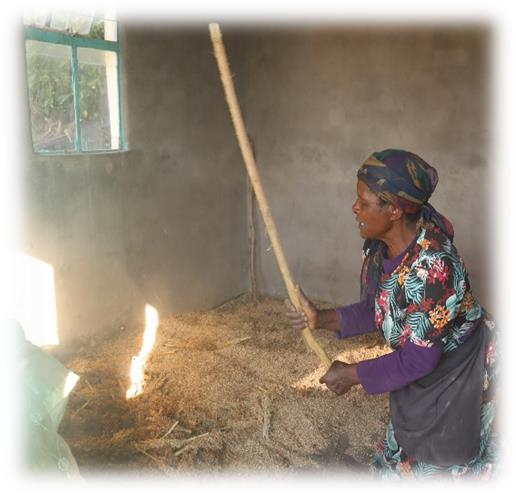
Where previously manual threshing required up to two weeks, depending on the number of participants, the mobile thresher now processes an average of five scotch carts of sorghum and yields approximately 11 bags (550kgs) in much less time. Each scotch cart, roughly two bags (100kgs), is threshed in just 11 minutes, a significant reduction in labor and time compared to traditional methods.
Farmers warmly welcomed this labour-saving innovation, expressing deep appreciation for technology that accomplishes the work swiftly and reliably. Manual threshing was physically demanding and time-consuming, often discouraging larger harvests due to limited labor. With mechanized threshing, farmers can now treat agriculture as a viable business and sustainable livelihood, investing their energy in expanding and diversifying production. These modern, energy-saving technologies are not just benefiting a select few—they are accessible to all who are ready to embrace innovation in farming. Adoption of these time-saving technologies also saw men actively participating in these processing activities, a task which was usually left for women.
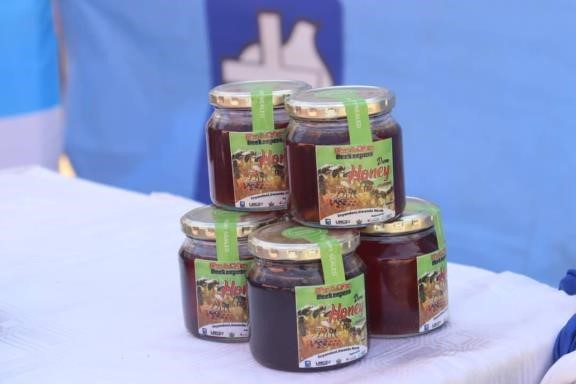
Recently, BIC-CDS proudly participated in the Matabeleland South Agricultural show held under the theme “from farm to factory.” Farmers showcased the full potential of improved agricultural practices by displaying locally produced sorghum mealie meal, peanut butter, and honey—testimony to how technology and community efforts can drive farm-to-table success and new economic opportunities for rural households.